
Legal US Vape Flavors 2026: Ultimate Guide to Happy Choices!
If you have tried to keep up with vape flavor rules over the past couple of years, you have probably noticed that the answer changes depending on who you ask. A gas station clerk will tell you almost anything is fine as long as you show ID. A news article might tell you flavored vapes are banned outright. Neither answer is quite right, and the real picture is more specific and more interesting than either extreme.
This guide walks through what the FDA has actually authorized, what “unauthorized” really means in practice, why certain brands keep disappearing and reappearing on store shelves, and how state law adds another layer on top of federal rules. None of this is legal advice, and vaping is not risk free even when a product is legally sold. The goal here is simply to explain the system clearly, using the most current information available.
The Legal Foundation: Why Vapes Need FDA Authorization at All
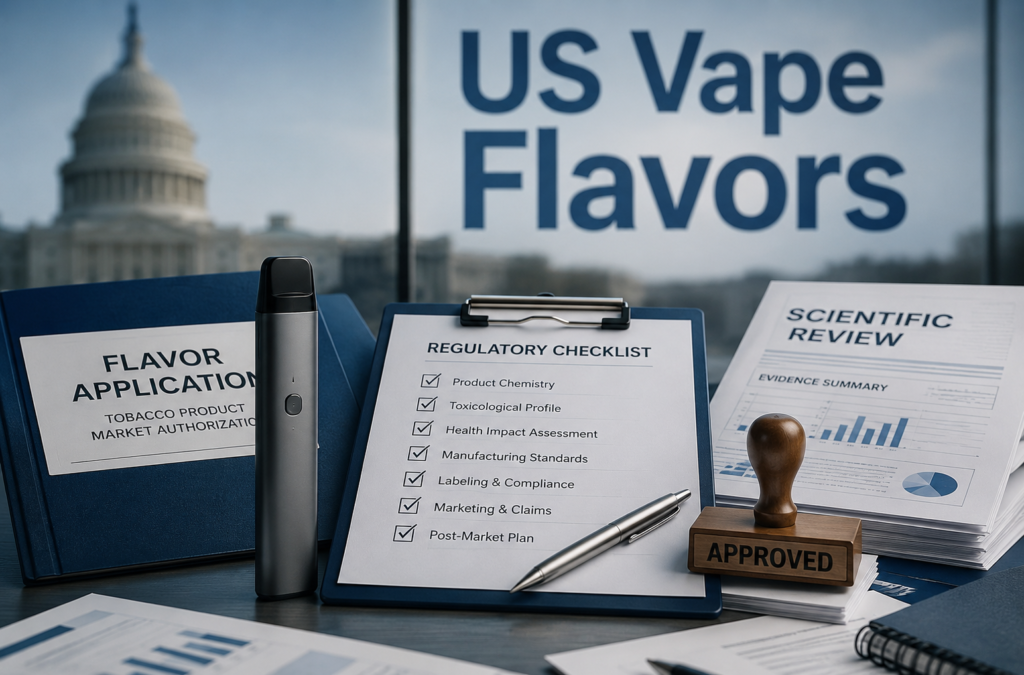
E-cigarettes fall under the Family Smoking Prevention and Tobacco Control Act, which gave the FDA authority over tobacco products, including vapor products that use nicotine. Under this law, any vape product that reached the market after February 15, 2007, has to go through a review process called the Premarket Tobacco Product Application, usually shortened to PMTA.
A company cannot simply start selling a new device or e-liquid flavor because it tastes good or looks appealing. It has to submit scientific evidence showing that authorizing the product would be appropriate for the protection of public health. That standard weighs the potential benefit to adult smokers who might switch from cigarettes against the risk that the product will attract people who never smoked, particularly teenagers.
This is the piece that trips people up. The FDA is not grading products on flavor quality or manufacturing standards the way a food inspector might. It is asking a narrower question: does the evidence show this specific product, in this specific flavor, at this specific nicotine strength, help more people quit smoking than it risks pulling into nicotine use who otherwise would have stayed away. That standard has proven very hard for flavored disposable vapes to meet.
How Many Vapes Are Actually Authorized
As of mid-2026, the number sits somewhere between roughly 39 and 45 depending on how you count duplicate entries, refill cartridges, and heated tobacco devices that get lumped into the same list. The FDA’s own authorized products page lists 45 entries, but once you strip out refill pods that are just accessories for an already-listed device, and remove products that have since been discontinued, the number of genuinely distinct devices on the market authorized for sale is closer to a dozen.
Every one of those authorized products comes from a small handful of companies: Vuse, NJOY, Logic, JUUL, and a newer entrant called Glas. For most of the past several years, every single authorized flavor fell into just two categories, tobacco and menthol. That changed in a meaningful way in the spring of 2026, when the FDA granted marketing authorization to two fruit flavored pods, blueberry and mango, made by Glas for its G2 device. This was the first time the agency had authorized a fruit flavored nicotine vape since the PMTA process began, and it happened because the device included a Bluetooth based age verification system that requires a smartphone app confirmation before the device will fire. The FDA specifically pointed to that age gating technology as a factor in the decision.
That single approval matters more than its size suggests. It signals that the agency is open to authorizing flavors beyond tobacco and menthol, but only when a manufacturer can show real, working technology that keeps the product out of the hands of minors. It is a narrow opening, not a broad shift, and dessert or candy flavored disposables still face what the FDA describes as the highest evidentiary burden of any flavor category.
Why Disposable Vapes Like Geek Bar Are Not FDA Authorized
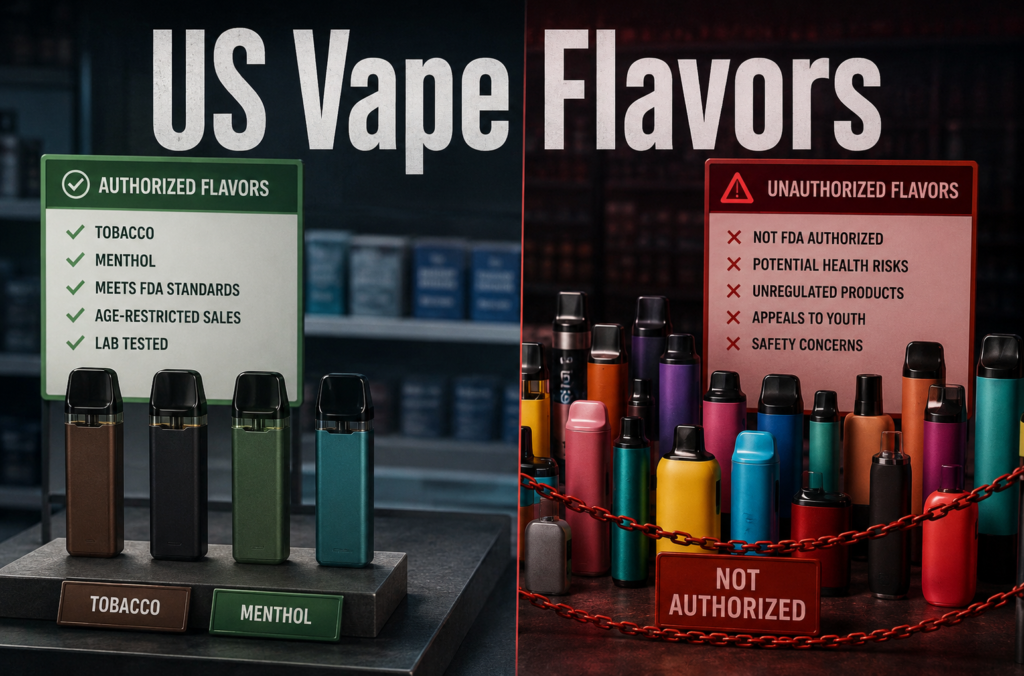
This is probably the most searched question in this entire topic, and the honest answer is straightforward. Disposable vape brands such as Geek Bar, Elf Bar, Lost Mary, Breeze, and Vozol have not received a single PMTA marketing authorization for any of their products. None of them appear on the FDA’s authorized list.
That does not necessarily mean every unit sold is manufactured illegally overseas or that the company never filed paperwork. Many of these companies did submit PMTA applications years ago. The applications were denied, are still pending, or were never completed with the level of evidence the FDA requires. In the meantime, the products keep showing up in vape shops and convenience stores because enforcement against retail sale has been inconsistent, not because the products have quietly become legal.
The FDA has issued hundreds of warning letters to retailers who continue stocking these unauthorized disposables, and working with Customs and Border Protection, the agency has seized and destroyed millions of illegal units at ports of entry. Despite that enforcement effort, unauthorized disposables still make up a large share of what people actually buy, largely because flavor variety and lower price points keep demand high.
What “Unauthorized” Actually Means for You as a Buyer
People often assume that an unauthorized product is automatically illegal to purchase or carry, similar to a controlled substance. That is not quite how the law works. Federal enforcement under the Tobacco Control Act targets the manufacturing, importing, and selling of unauthorized products. It does not create a federal crime for an individual adult who buys or possesses one.
State law is a different story, and this is where things get genuinely complicated. A growing number of states have passed their own registries or flavor restrictions that go further than federal law. Mississippi, for example, passed a PMTA registry law that effectively blocks the sale of most disposable vapes and non-compliant e-liquids within the state, regardless of what federal enforcement is doing. California, Massachusetts, and New York enforce their own statewide restrictions on flavored vape sales that predate some of the more recent federal activity. A handful of states have gone as far as criminalizing personal possession of certain unauthorized products, which is a meaningfully different legal exposure than simply buying something the FDA has not signed off on.
Because state rules shift often and vary widely, checking your own state’s current tobacco and vapor product laws is worth doing before assuming a product you see on a shelf is fine just because the store is selling it.
Understanding the FDA’s Age Verification Push
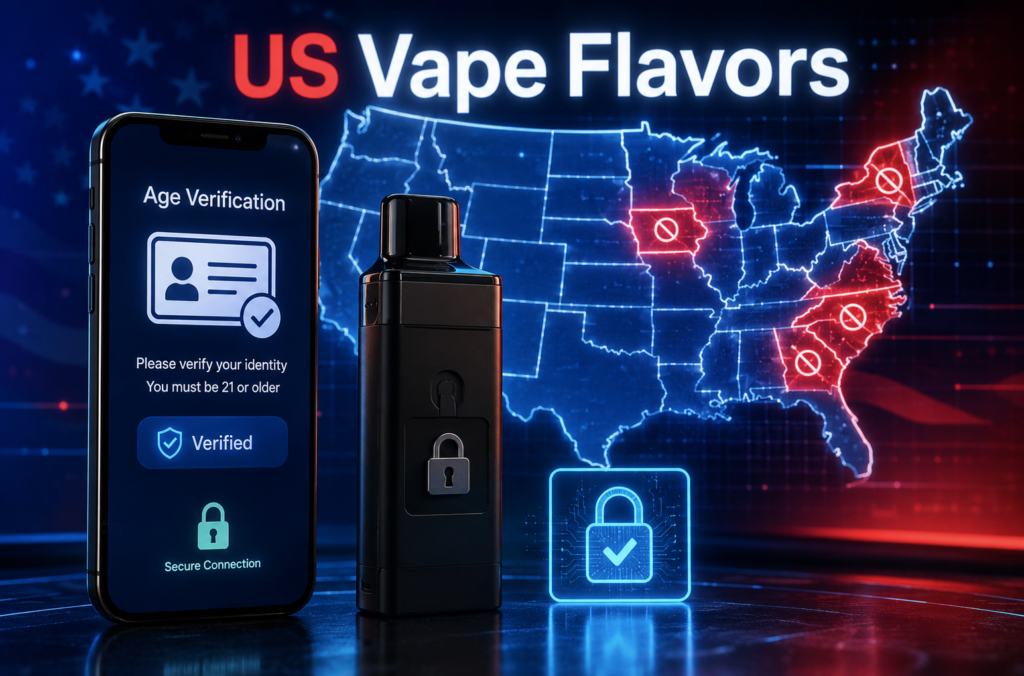
The Glas fruit flavor authorization was not an isolated technical decision. It reflects a broader strategy shift at the FDA toward treating device level age verification as a legitimate way to offset the youth appeal of a flavor. In its own public statements, the agency has described access restriction technology as a potential turning point for the category, since it lets manufacturers demonstrate that adults can use the product easily while younger users cannot get past the verification step.
If that approach continues to gain traction, it is reasonable to expect more manufacturers to pursue smartphone linked or app gated devices with expanded flavor options in pursuit of authorization. For now, though, this remains a single case rather than an established pathway, and most of the flavor variety consumers are used to still exists entirely outside the authorized market.
A Quick Look at What Counts as Authorized Today
To summarize where things stand without pretending the list is longer or more exciting than it actually is, here is the shape of the authorized market as of mid-2026:
Vuse holds authorization for its Alto device in tobacco flavors under a few different nicotine strengths. NJOY has authorization across its ACE and Daily product lines, again limited to tobacco and menthol. JUUL received authorization for its original pod device in Virginia Tobacco and Menthol flavors at two nicotine strengths. Logic has several tobacco flavored cartridge and starter kit products cleared, including one heated tobacco device that gets listed alongside traditional e-cigarettes even though it works differently. Glas is the newest name on the list and the only company with authorized fruit flavors, specifically mango and blueberry, tied to its age verification technology.
Everything else you might see marketed as a flavored vape, including the overwhelming majority of what fills convenience store shelves, sits outside this list.
Staying Informed as the Rules Keep Changing
Vape regulation is one of those areas where the details genuinely do shift every few months. The FDA updates its authorized products list the same day it issues a new order, and state legislatures introduce new bills on flavor restrictions and possession rules on an ongoing basis. Federal legislation aimed at a broader nationwide restriction on unauthorized disposables has also been discussed in Congress, though nothing at that scale had passed as of mid-2026.
If flavor availability and legal status matter to you, whether as a consumer, a retailer, or simply someone trying to make sense of the news, the most reliable habit is checking the FDA’s own authorized products page directly rather than relying on secondhand summaries, since even well meaning articles can go out of date within weeks. Retailers in particular carry real financial exposure here, since selling unauthorized products can lead to warning letters, fines that stack per violation, and in serious cases a No Tobacco Sale Order that blocks a business from selling any tobacco product for a set period.
The Bottom Line
The vaping market that most people encounter in stores and the vaping market that is actually authorized by federal regulators are two very different things. A small number of tobacco and menthol products from five companies make up the fully legal list, with one narrow exception for fruit flavors tied to age verification technology. Everything else, including most of the disposable brands people recognize by name, exists in a legal gray zone shaped by inconsistent enforcement rather than genuine approval.
Understanding that gap matters whether you are trying to make an informed purchase, run a compliant retail business, or simply follow a policy area that keeps evolving. The safest approach is always to check current, official sources rather than assuming that shelf availability equals legal clearance.