
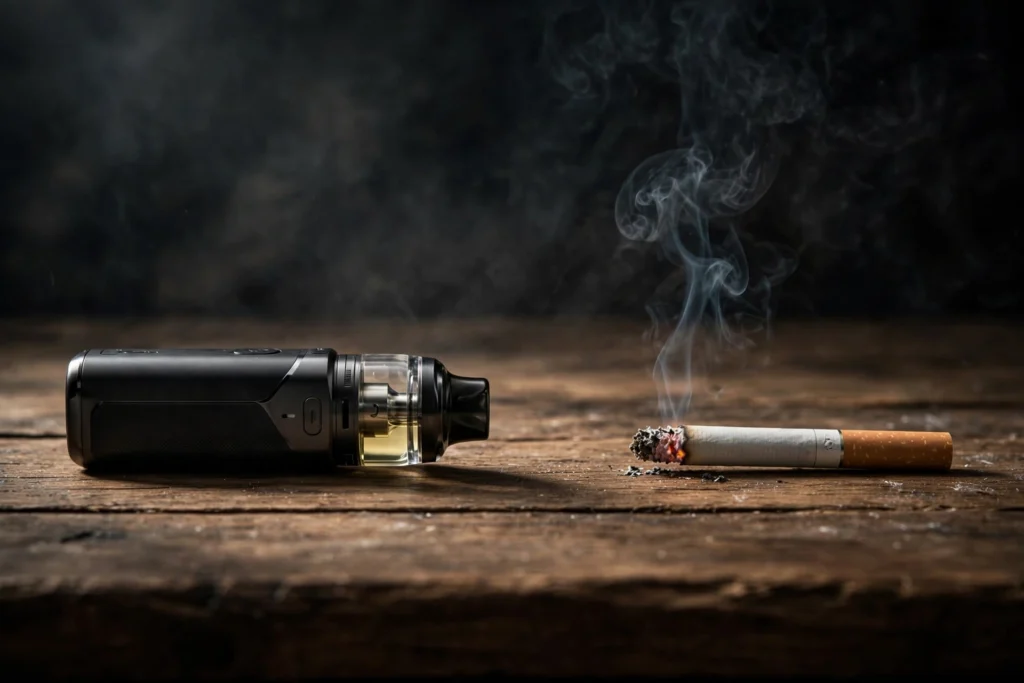
8 Honest Facts: The Definitive Vaping vs Smoking Comparison Guide
The debate between vaping vs smoking has been ongoing for years. If you are trying to understand the differences, you have probably encountered strong opinions on both sides. This both options comparison aims to cut through the noise with honest, carefully worded facts.
This vaping vs smoking guide does not claim that vaping is safe or present it as a way to quit smoking. Instead, it examines both practices across the dimensions people ask about most: how they work, what is inside, how they affect others, what they cost, and how they are regulated. The goal is to help you form your own view based on clear information.
If you are a smoker curious about alternatives, a vaper wanting to understand the landscape, or simply someone seeking facts, this vaping vs smoking comparison provides a balanced look. Let us explore eight honest facts.
Fact 1: Combustion Makes All the Difference
The most fundamental distinction in both options is combustion. Cigarettes burn tobacco at high temperatures, creating smoke through combustion. Vape devices heat e-liquid to create vapor without burning anything. This vaping vs smoking difference is the foundation for understanding everything else.
When tobacco burns, it produces tar, carbon monoxide, and thousands of other chemicals. Many of the most harmful substances in cigarette smoke are created by the burning process itself. This is a key point in any vaping vs smoking discussion.
Vapor from e-liquid does not involve combustion. The e-liquid typically contains propylene glycol, vegetable glycerin, flavorings, and optional nicotine. When heated, these ingredients form vapor. This both options distinction matters because it changes what you inhale.
That said, this vaping vs smoking guide emphasizes that absence of combustion does not mean absence of risk. Vapor still contains substances worth taking seriously, and long-term research is ongoing. The honest position acknowledges both the difference and the unknowns.
Fact 2: What Is Actually Inside Each
Understanding ingredients helps clarify the vaping vs smoking comparison. Let us look at what each involves.
Cigarette smoke contains thousands of chemical compounds. Public health agencies have identified many as harmful. The well-known dangers include tar, carbon monoxide, and various toxicants produced when tobacco and additives burn. This complexity is central to both options discussions about health.
E-liquid has a simpler composition. A typical bottle contains propylene glycol and vegetable glycerin as the base, food-grade flavorings, and optional nicotine. When heated, these form the vapor you inhale. The ingredient list is shorter than cigarette smoke, but this vaping vs smoking guide notes that shorter does not mean risk-free.
Nicotine appears in both, though not all e-liquids contain it. Nicotine is addictive, and scientists continue studying the effects of inhaling heated flavorings over time. This vaping vs smoking comparison acknowledges that both involve substances deserving careful consideration.
The honest takeaway: smoke contains combustion products, while vapor contains heated e-liquid ingredients. Both warrant respect and informed decision-making. This both options guide presents these facts without minimizing either side.
Fact 3: What Research Tells Us So Far
Research is crucial to any vaping vs smoking comparison, but it is important to understand its limits.
Cigarettes have been studied for decades. The evidence linking smoking to serious health issues is extensive and well-established. This long research history gives us confidence about smoking’s risks. Any vaping vs smoking discussion must acknowledge this solid foundation.
Vaping products are much newer. Long-term studies take time, and comparable data does not yet exist. Researchers are actively studying vaping’s effects, but definitive long-term conclusions are still years away. This both options guide is transparent about this gap.
What do experts generally agree on? That avoiding both is the best choice for health. Some researchers note that vaping likely exposes users to fewer toxicants than smoking due to the absence of combustion. However, major health organizations stress that vaping is not risk-free and is not recommended for youth, non-smokers, or pregnant women.
This vaping vs smoking guide advises healthy skepticism toward absolute claims in either direction. The science is still developing, and responsible discussion acknowledges uncertainty. For authoritative updates, the FDA tobacco products page is a valuable resource.
Fact 4: Effects on People Around You
Secondhand exposure is an important part of vaping vs smoking considerations.
Secondhand cigarette smoke is well-studied. Health agencies worldwide agree it carries real risks, which is why indoor smoking bans are common. The dangers of secondhand smoke are established science. This both options fact is not disputed.
Secondhand vapor has been studied less. Exhaled vapor does release substances into the air, but at lower levels and in a form that disperses quickly. Because research is thinner, many indoor restrictions applied to smoking have been extended to vaping as a precaution.
In this vaping vs smoking comparison, the honest statement is: secondhand smoke risks are well-documented, while secondhand vapor effects are less understood. Considerate behavior and respect for local rules are appropriate for both. This vaping vs smoking guide recommends following posted signs and being mindful of others.
Fact 5: Daily Life Differences
Beyond health, both options differ in practical daily life aspects.
Smell is a major difference. Cigarette smoke clings to clothes, hair, furniture, and walls. It yellows teeth over time. The odor is noticeable to everyone nearby. This is one of the most immediate vaping vs smoking differences people notice.
Vapor behaves differently. It has a scent reflecting the e-liquid flavor, but it fades quickly from air and fabrics. It does not leave the same stubborn residue. Many adults who switch mention this practical difference. This vaping vs smoking observation is about lifestyle, not health.
Social dynamics differ too. Smoking breaks have a long cultural history. Vaping has developed its own culture with flavor discussions and device enthusiasts. This both options guide notes these social dimensions without judging either.
Convenience also varies. Cigarettes require no charging or maintenance. Vape devices need charging, refilling, or pod replacement. This vaping vs smoking practicality factor matters for daily routines.
Fact 6: The Cost Comparison
Money is a practical part of vaping vs smoking decisions. Let us break it down honestly.
Smoking costs add up quickly. A pack-a-day habit can cost hundreds of dollars monthly, varying by location and taxes. Prices tend to rise over time. This both options cost reality is straightforward.
Vaping has different economics. There is an upfront device cost, then ongoing e-liquid and coil or pod expenses. For many adults, this works out cheaper than daily cigarette purchases. However, costs depend heavily on device type and usage patterns. This vaping vs smoking guide notes that disposables cost more per use than refillable systems.
The honest vaping vs smoking cost comparison: vaping is often less expensive for regular users, but actual savings depend on habits and hardware choices. You can compare options at the DiscoverVapes shop.
Neither option is free, and both represent ongoing expenses. This both options guide encourages budgeting realistically for whichever path you consider.
Fact 7: Regulation and Legal Landscape
Both are regulated, but differently. This vaping vs smoking fact is important for responsible use.
In the United States, the FDA regulates e-cigarettes as tobacco products. This means requirements around marketing, labeling, and product review. The federal minimum purchase age for tobacco and vaping products is 21. This vaping vs smoking regulatory fact applies nationwide.
States and cities add their own rules. Some restrict flavors. Others ban vaping in certain public places. The regulatory landscape for vaping is newer and changes more frequently than cigarette regulations. This both options guide advises checking local laws.
Cigarettes face long-established regulation: heavy taxation, advertising restrictions, and widespread indoor bans. These rules are relatively stable. Vaping regulations are still evolving, creating a more dynamic legal environment.
This vaping vs smoking guide emphasizes: know the laws where you live, respect posted signs, and never purchase these products if underage. Responsible behavior matters regardless of which product is involved.
Fact 8: The Social and Cultural Dimensions
Beyond practicalities, vaping vs smoking carry different social meanings.
Smoking has declined socially in many places. Indoor bans, health campaigns, and changing norms have made smoking less accepted publicly. Smokers often face stigma. This both options social reality affects daily life.
Vaping occupies a complex social position. Some view it as a harm reduction tool. Others see it as a new public health concern, especially regarding youth use. Attitudes vary widely by community and generation. This vaping vs smoking guide observes these dynamics without taking sides.
Both involve rituals: the hand-to-mouth motion, breaks in the day, social moments. These patterns are part of why habits form. This vaping vs smoking observation acknowledges the behavioral similarities.
The cultural conversation continues evolving. This both options guide suggests approaching discussions with respect rather than judgment, recognizing that behind every opinion is a person with their own experiences.
Making Informed Decisions
This vaping vs smoking guide has presented eight honest facts. Now what?
If you smoke and are considering change, the most reliable step is speaking with a healthcare professional. They can discuss evidence-based options tailored to your situation. This vaping vs smoking article is for information, not medical advice.
If you vape, stay informed about research and regulations. If you do neither, the healthiest choice is to continue avoiding both. This both options guide respects all paths.
For more information on getting started with vaping, see our beginner vape guide. To explore products, visit DiscoverVapes. For regulatory updates, the FDA tobacco products page provides authoritative information.