
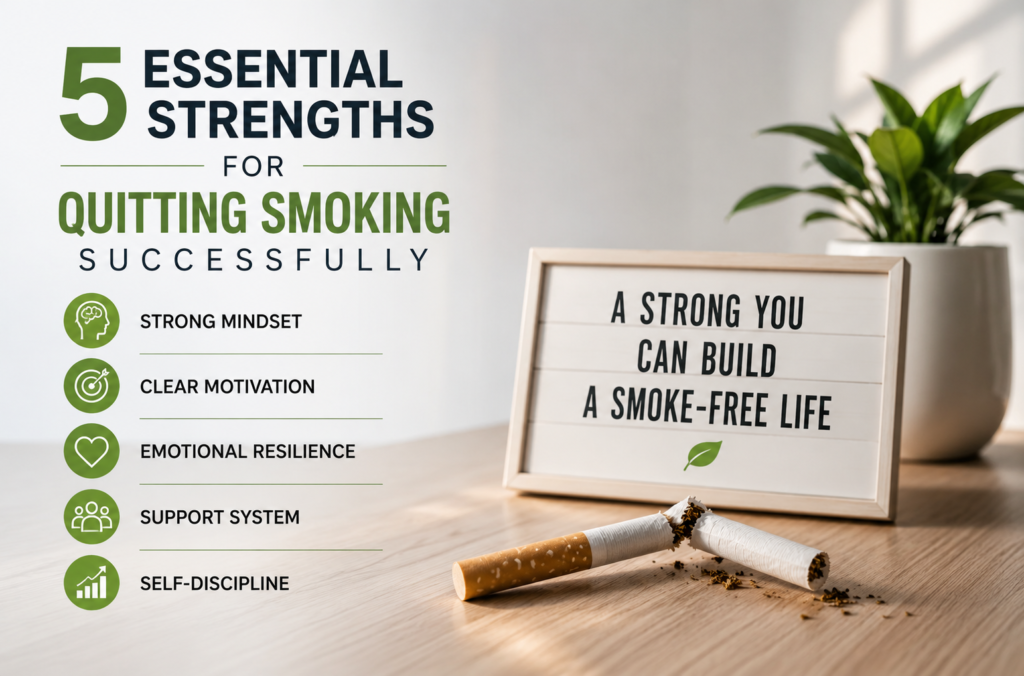
5 Essential Strengths for Quitting Smoking Successfully
Finding the inner strength to quitting smoking is one of the most rewarding decisions a person can make. Millions of people around the world have successfully stopped smoking, and their stories show that it’s possible for anyone willing to commit to the journey. The path to becoming smoke-free isn’t always easy, but with the right approach and mental fortitude, you can break free from nicotine addiction and reclaim your health and freedom.
The reason so many people struggle with smoking cessation is that they underestimate the strength required. It’s not just about willpower. It’s about identifying the specific inner qualities that will carry you through the tough moments when cravings hit hardest. This guide explores the most important strengths that help people succeed in their quitting smoking efforts.
What Makes Quitting Smoking Difficult
Before we discuss the strengths needed to stop smoking, it helps to understand what you’re working against. Nicotine dependence is a powerful force. Your brain has formed chemical associations with smoking, and those pathways don’t disappear overnight. Every cigarette you’ve smoked has reinforced neural patterns that make your body crave nicotine when triggered by certain situations, emotions, or habits.
Beyond the physical aspect, smoking addiction ties into your emotions, social life, and daily routines. You might smoke when stressed, bored, happy, or social. This multi-layered connection makes overcome smoking challenges feel overwhelming without a clear plan and genuine inner strength.
The Five Strengths That Matter Most

Research into successful smoking recovery shows that people who succeed consistently develop five core strengths. Building these qualities dramatically increases your chances of achieving a smoke-free life.
1. Mental Resilience: Your Greatest Asset for Smoking Cessation
Mental resilience is the backbone of successful quitting smoking efforts. This strength allows you to face cravings without giving in, to handle setbacks without spiraling into defeat, and to stay committed even when progress feels slow. Mental resilience isn’t something you’re born with. It’s something you build through practice and intention.
People with strong mental resilience approach smoking withdrawal as a challenge to overcome rather than an impossible burden. They expect difficult moments and prepare for them. They don’t see one slip-up as complete failure. Instead, they learn from it and recommit immediately.
Building Mental Resilience for Break Smoking Habit
Start by accepting that overcoming smoking urges will be hard. This acceptance paradoxically makes it easier because you’re not surprised or devastated when cravings hit. You anticipated them. Next, create a written list of reasons why you want to stop smoking. Not surface reasons, but deep ones. Maybe it’s to be healthy for your children, to have money for things you love, or to feel proud of yourself. Review this list daily, especially on tough days.
Another powerful technique is visualization. Spend a few minutes each day visualizing yourself successfully overcoming smoking in situations where you normally would have smoked. See yourself choosing differently. This mental rehearsal trains your brain to follow through in real moments.
2. Self-Compassion: The Forgotten Strength in Quitting Smoking Success
Many people approach smoking cessation with harsh self-judgment. They set impossibly high standards, criticize themselves for every craving, and abandon their efforts at the first misstep. This approach backfires because harsh self-treatment increases stress, which increases cravings. The irony is that you end up smoking more because you’re trying to escape the guilt of smoking.
Self-compassion breaks this cycle. When you treat yourself kindly during quitting smoking efforts, you build emotional safety. This allows you to acknowledge difficulties without shame. You can feel a craving, sit with it, and choose not to smoke without collapsing into self-criticism.
Practicing Compassion During Smoke-Free Transition
Talk to yourself the way you’d talk to a good friend going through smoking withdrawal. When a craving hits, instead of thinking “I’m weak” or “I’ll never make it,” try “This is hard, and I’m doing it anyway.” This small shift in language reduces the emotional weight of the moment. You acknowledge the difficulty while affirming your commitment.
Keep a compassion journal specifically for your quitting smoking journey. Write about struggles without judgment. Acknowledge your effort, no matter how small the victory. Did you resist one craving today? That’s worth recognizing. Did you experience a smoking relapse prevention moment and choose not to smoke? Celebrate that.
3. Clarity: Knowing Your Why Behind Quitting Smoking
Confusion about your reasons for smoking cessation leaves you vulnerable. Vague motivations like “I should quit” or “It’s bad for me” won’t sustain you through difficult moments. You need crystal-clear clarity about why this matters to you personally.
People who successfully overcome smoking challenges consistently report that they reached a point where continuing to smoke became unbearable. The pain of staying the same exceeded the discomfort of change. They weren’t just trying to quit. They had become crystal clear that smoke-free living was non-negotiable.
Developing Unshakeable Clarity for Stop Smoking Goals
Get specific about how nicotine addiction affects your life. Document the financial cost. Track the impact on your health, your breath, your clothes, your relationships. Write about moments when smoking addiction controlled you rather than the other way around. Maybe it meant missing time with people you love because you needed a cigarette. Maybe it meant physical limitations that frustrated you.
Then write about what becomes possible in a smoke-free life. Better health markers. More money. Freedom from constant cravings. The ability to take stairs without wheezing. Feeling proud of yourself. The more vivid and personal this vision, the stronger your motivation for successful quitting smoking efforts.
4. Social Connection: The Underestimated Strength for Smoking Recovery

Attempting quitting smoking in isolation dramatically decreases your chances of success. Humans are social creatures. We’re designed to rely on connection and support. Yet many people try to overcome smoking entirely alone, believing they should handle it independently. This self-reliance becomes a weakness rather than a strength.
Research consistently shows that people in smoking cessation programs with strong support networks have significantly higher success rates than those going it alone. Support doesn’t just provide motivation. It provides accountability, practical strategies, emotional validation, and hope when things get tough.
Building Your Support Network for Break Smoking Habit
Tell people you trust about your decision to stop smoking. Choose people who will genuinely support you rather than judge. These people become your accountability partners. Let them know how they can help. Maybe it’s a daily check-in text. Maybe it’s going for a walk together when cravings hit. Maybe it’s listening without judgment when you need to talk.
Consider joining a quitting smoking support group. These might be local meetings or online communities focused on smoking cessation. Hearing others talk about their smoking withdrawal experiences, their breakthroughs, and their strategies normalizes the struggle. You realize you’re not alone in this. The community aspect of quitting smoking groups provides genuine strength.
5. Adaptive Problem-Solving: The Practical Strength for Quitting Smoking Success
Every person’s journey to smoking cessation looks different because every person’s triggers and circumstances are different. Flexibility in your approach is crucial. The strength to succeed comes partly from willingness to adapt your strategy when something isn’t working.
Maybe you try quitting smoking cold turkey and realize you need nicotine replacement therapy to manage physical symptoms. Maybe you use smoking treatment medications that help reduce cravings. Maybe you discover that your biggest trigger is alcohol, so you need to adjust how you drink. All of these adjustments show strength, not weakness. They show you’re serious enough to do what actually works rather than stubborn commitment to a failing plan.
Developing Problem-Solving Skills for Smoking Relapse Prevention
Create a detailed list of your personal smoking triggers. These are specific situations, emotions, or times when you feel most likely to smoke. Don’t just list them. Next to each trigger, write down alternative behaviors you’ll do instead of smoking. If stress triggers smoking, maybe you exercise, call someone, or practice deep breathing. If social situations trigger smoking, maybe you offer to be the driver so you can’t smoke, or you prepare a phrase to use when someone offers you a cigarette.
Test these alternatives before you quit. This way you’re not improvising in a moment of high temptation. You’ve already practiced your response. This preparation is genuine strength because it acknowledges that cravings are powerful and you need a real plan to navigate them.
Bringing These Strengths Together
Successful quitting smoking efforts combine all five strengths. Mental resilience keeps you going when things are hard. Self-compassion prevents the shame spiral that derails many attempts at smoking cessation. Clarity about your why becomes your north star when commitment wavers. Social connection provides support and accountability. Adaptive problem-solving ensures you have practical tools to handle real situations in your smoke-free life.
These strengths reinforce each other. As you build mental resilience, your clarity deepens. As your social connections grow stronger, self-compassion becomes easier. As you solve real problems successfully, your confidence and mental resilience increase.
The Timeline of Building Strength for Smoking Recovery
Understand that overcome smoking is a process, not an event. The first three days are typically the hardest because physical nicotine dependence peaks. The first week is still challenging as your body adjusts. By week two, most physical withdrawal symptoms have passed, though cravings may remain. By four weeks, many people find the intensity of cravings has decreased significantly.
This doesn’t mean you’ll be cured at four weeks. Psychological smoking addiction can linger longer. But research shows that most people who make it to four weeks have gained enough strength and confidence to keep going. The rewiring of your brain away from nicotine addiction continues for months, but it gets progressively easier.
Benefits You’ll Experience Through Quitting Smoking

As you build these five strengths and successfully stop smoking, you’ll experience rewards that reinforce your commitment. Within hours, carbon monoxide levels in your blood drop. Within days, your sense of smell and taste improve. Within weeks, your lung function begins improving. Within months, you’ll notice you can breathe easier, have more energy, and feel proud every time you overcome a situation you once managed with cigarettes.
Beyond physical quitting smoking benefits, you’ll experience emotional and psychological gains. You’ll feel more in control of your life. You’ll have more money. Your relationships may improve because you’re not irritable from nicotine withdrawal and you’re not disappearing for cigarette breaks. You’ll carry a quiet pride that comes from accomplishing something genuinely difficult.
Moving Forward on Your Smoke-Free Journey
Building the strength to quitting smoking starts today, whether you quitting smoking tomorrow or next month. Start developing your why right now. Begin telling your support network about your commitment. Start identifying your triggers and planning alternatives. Build your mental resilience through daily visualization. Practice self-compassion as you make this transition.
The strength you need to overcome smoking isn’t something foreign or difficult to access. It’s already inside you. It’s the same strength that got you through other hard things in life. Now you’re pointing it toward smoking cessation. The fact that you’re reading this suggests you’re ready.
Your smoke-free life is waiting on the other side of this challenge. It’s worth the strength it takes to get there.